The True Cost of Idling in Commercial Trucking — And How to Stop It
Idling kills $5,000-$8,000 per truck per year in fuel and adds thousands more in engine wear. Most of it is preventable. Here is the math and the playbook to stop it.
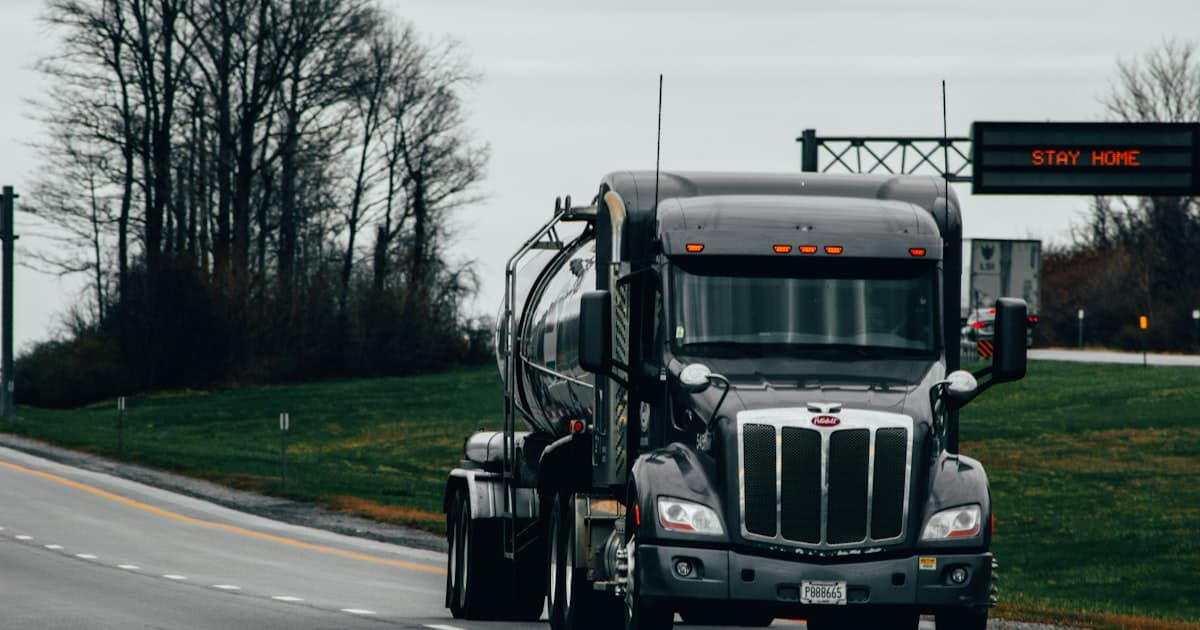
Pull up any fleet's telematics report and sort by idle hours. What you find surprises most operators — trucks that appear productive on paper are routinely sitting with the engine running for 6, 8, even 10 hours per day. Nobody budgeted for it. It doesn't show up as a line item. But it's costing you thousands per truck, every year, for nothing.
The exact math
A Class 8 diesel engine burns 0.7–0.9 gallons per hour at idle — call it 0.82 gal/hr on average. At $3.60/gal diesel: one hour of idle costs about $2.95. A truck idling 8 hours overnight costs $23.63 that day. Run the numbers across 250 operating days: $5,906 per truck per year in fuel burned while the truck is parked.
That's fuel cost alone. Engine idle hours also count against engine life — typically at the equivalent of 60 miles per hour of idle. A truck idling 8 hours/day accumulates 1,460 "equivalent miles" per year while stationary. An engine rebuild or replacement runs $15,000–$35,000, and idle hours count against engine life at roughly 60 miles of equivalent wear per hour of idle. At 8 hours per day, that is 480 equivalent miles per day — adding 120,000 equivalent miles per year without moving the truck.
Why Drivers Idle
The primary driver of overnight idling is HVAC — keeping the cab warm in winter and cool in summer. DOT regulations prohibit mandatory engine-off requirements that would compromise driver health or safety in extreme temperatures. That is the right rule. The solution is not to tell drivers to idle less — it is to give them a better alternative.
Secondary causes of excessive idle: waiting at docks or delivery points (common in reefer and intermodal operations), traffic (unavoidable but often over-attributed), and habit (drivers who were trained to warm up diesel engines, a practice unnecessary on modern engines).
The Idle Reduction Playbook
Auxiliary Power Units (APUs)
An APU is a small diesel or electric generator mounted to the truck that provides HVAC and electrical power while the main engine is off. A diesel APU burns approximately 0.2-0.3 gallons per hour — 70% less than main engine idle. On a truck idling 8 hours per night, an APU converts $23.63/day in fuel to roughly $6-$8/day. The savings: $3,900-$4,500 per truck per year. Most APUs cost $8,000-$12,000 installed and pay back in 2-3 years.
Battery HVAC Systems
Battery-based HVAC (also called zero-idle systems or electric APUs) stores energy during driving and delivers HVAC at rest with zero fuel burn. Idle fuel savings are complete, but the battery has 8-12 hour capacity limits in extreme temperatures. These systems work well for regional operations with consistent return-to-terminal schedules but can fall short for OTR runs in extreme cold or heat.
Truck Stop Electrification
Shore power hookups at truck stops (Idle Air, ParkSmart, and TA's TruckPark systems) let drivers plug into HVAC and power without running any engine. Cost is typically $2-$3.50 per hour — significantly less than idle fuel cost. Not all routes have adequate coverage, but in high-density corridors, this is a cost-effective complement to an APU program.
Policy and Monitoring
APUs solve the overnight HVAC problem. Daytime idle — at docks, in traffic, during pre-trip inspections — is more addressable with policy and monitoring. Setting idle alerts in your telematics platform (anything over 5 minutes of stationary idle triggers a notification) and tying idle rates to driver scorecards reduces discretionary idling by 20-35% in most fleets within 90 days.
Anti-Idling Regulations
California, Texas, New York, New Jersey, and several other states have anti-idling regulations that limit main engine idle to 3-5 minutes in certain areas. EPA SmartWay and many shipper sustainability programs also audit idle rates. Fleets operating in regulated states without idle reduction technology face both compliance risk and shipper qualification risk.
The business case for idle reduction does not require regulatory pressure to be compelling. At $5,000- $8,000 per truck per year in avoidable fuel cost, the ROI on APU programs is one of the clearest in fleet management.
See This In Your Fleet
We'll show you exactly what your fleet is losing in a free 20-minute session using your real data.
Book a Free Demo